

-
Tomography as Kernel Regression
-
Nonparametric Riemannian Empirical Bayes, and Denoising Measurements on Manifolds
Yun Ho's Abstract: Estimating 3D structural variability from sparse, noisy 2D projections remains a fundamental statistical challenge in modern imaging modalities. In this talk, we develop a comprehensive framework for low-dose tomography by recasting the X-ray transform as an operator between reproducing kernel Hilbert spaces (RKHSs). This functional-analytic perspective yields a powerful, dimension-free reconstruction method that provides sharp stability guarantees for discrete data, entirely circumventing traditional Fourier-domain techniques.
Building on this theoretical foundation, we address the challenge of characterizing conformational heterogeneity from extremely sparse data. By modeling the structural ensemble as a Gaussian random field, we establish that the mean structure and its covariance operator can be consistently estimated using as few as two projections per particle. To overcome the formidable computational hurdle of estimating these high-dimensional objects—a large-scale, restricted least-squares optimization problem—we introduce the Tensorized-and-Restricted Krylov (TReK) method. This flexible, rapidly converging algorithm extends Conjugate Gradient techniques by leveraging efficient tensor-matrix operations. This talk is based on joint work with Victor Panaretos (EPFL, Switzerland) and Alessia Caponera (LUISS Guido, Italy).
Adams Jaffe's Abstract: We initiate the study of nonparametric empirical Bayes denoising methods in the setting where both the latent variables and their measurements lie on a compact Riemannian manifold, and where the likelihood is a Riemannian Gaussian distribution. Our starting point is a novel Tweedie-Eddington formula for Riemannian Gaussian mixture models which identifies a certain surrogate oracle denoiser in terms of the marginal distribution of the measurements; it avoids the explicit computation of the posterior Fréchet mean (as required by the Bayes denoiser) via a first-order approximation, hence we refer to it as the "tangential" Bayes denoiser. We show that this surrogate oracle achieves nearly the Bayes risk in a low-noise regime, we construct a fully data-driven approximation of it using the spectral theory of the Laplace-Beltrami operator, and we establish finite-sample rates of convergence for the distance between the the surrogate oracle and its approximation. Contrasting the nearly-parametric rates from the Euclidean setting, the rates in the Riemannian setting are slower due to the singularities of the Riemannian Gaussian density at the cut locus of its Fréchet mean; in the special case of the circle we establish matching lower bounds which show that our proposed denoiser is minimax-optimal, and that the denoising problem exhibits a genuinely nonparametric rate of convergence. Lastly, we implement our methodology in two scientific applications: in astronomy, the sphere-valued problem of denoising the locations of gamma ray bursts; in structural biology, the torus-valued problem of denoising pairs of torsion angles of adjacent amino acids in a protein (i.e., the Ramachandran plot). Based on joint work with Leonardo Santoro (EPFL) and Bodhisattva Sen (Columbia).
Yun Ho - Bio
Ho Yun is a Founder’s Postdoctoral Fellow in the Department of Statistics at Columbia University since the fall of 2026. His research focuses on functional data analysis subject to observational and dynamic barriers. His primary research areas include inverse problems, specifically estimating functions from the discretized values of filtered observations, and optimal transport, with an emphasis on inferring the evolution of stochastic random functions. Prior to joining Columbia, Ho earned his PhD at EPFL in Switzerland under the supervision of Victor M. Panaretos.
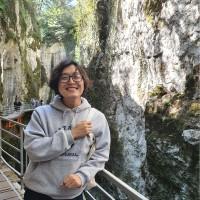
Yun Ho
Adam Jaffe - Bio
Adam is a postdoctoral researcher in the Department of Statistics at Columbia University, working under the supervision of Bodhisattva Sen. His research focuses on interactions between probability, statistics, and geometry, including clustering, dimensionality reduction, empirical Bayes, Fréchet means, information geometry, optimal transport, and Riemannian optimization. Previously, he completed his PhD at UC Berkeley and his undergraduate at Stanford.
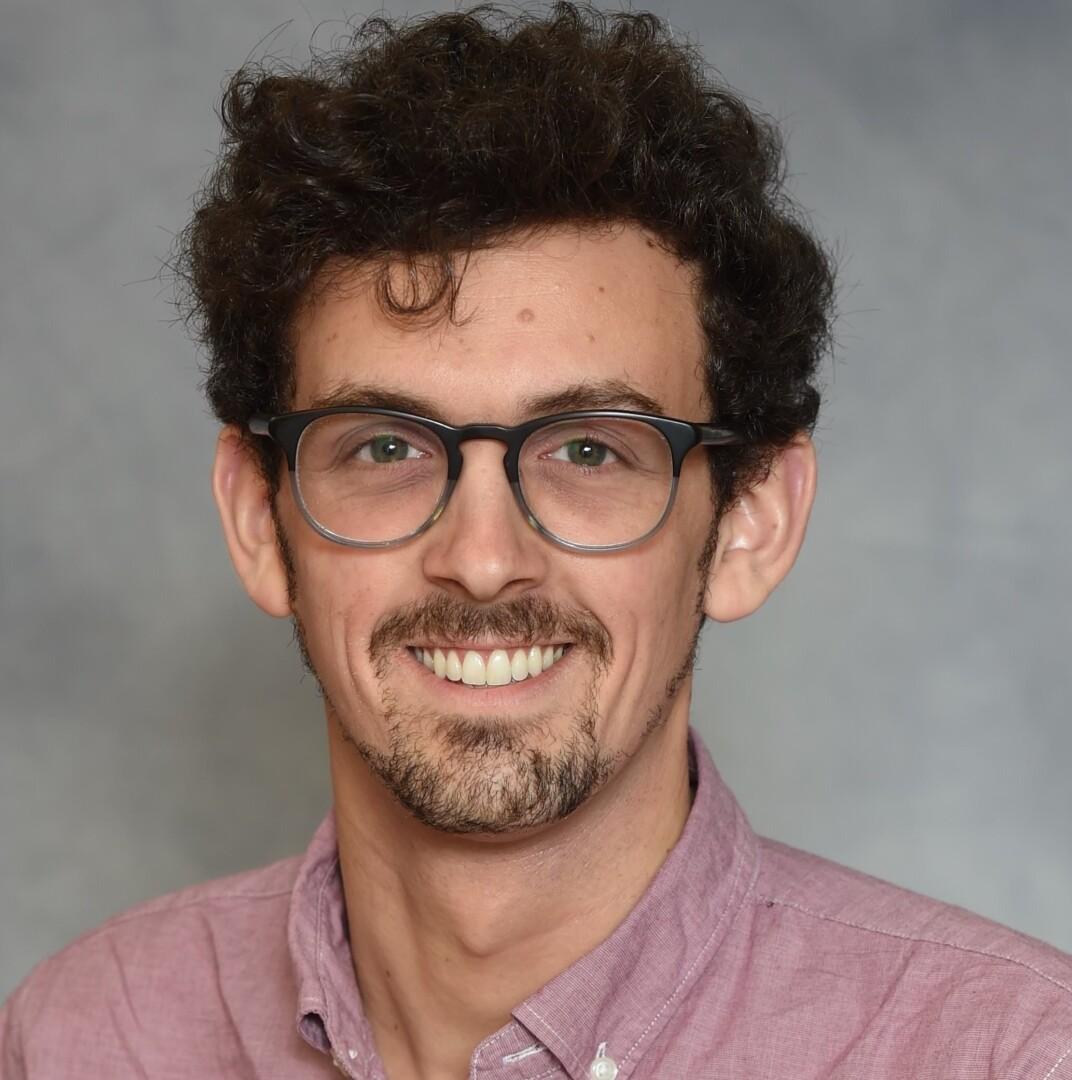
Adam Jaffe